




Material Topics and Strategic Alignment
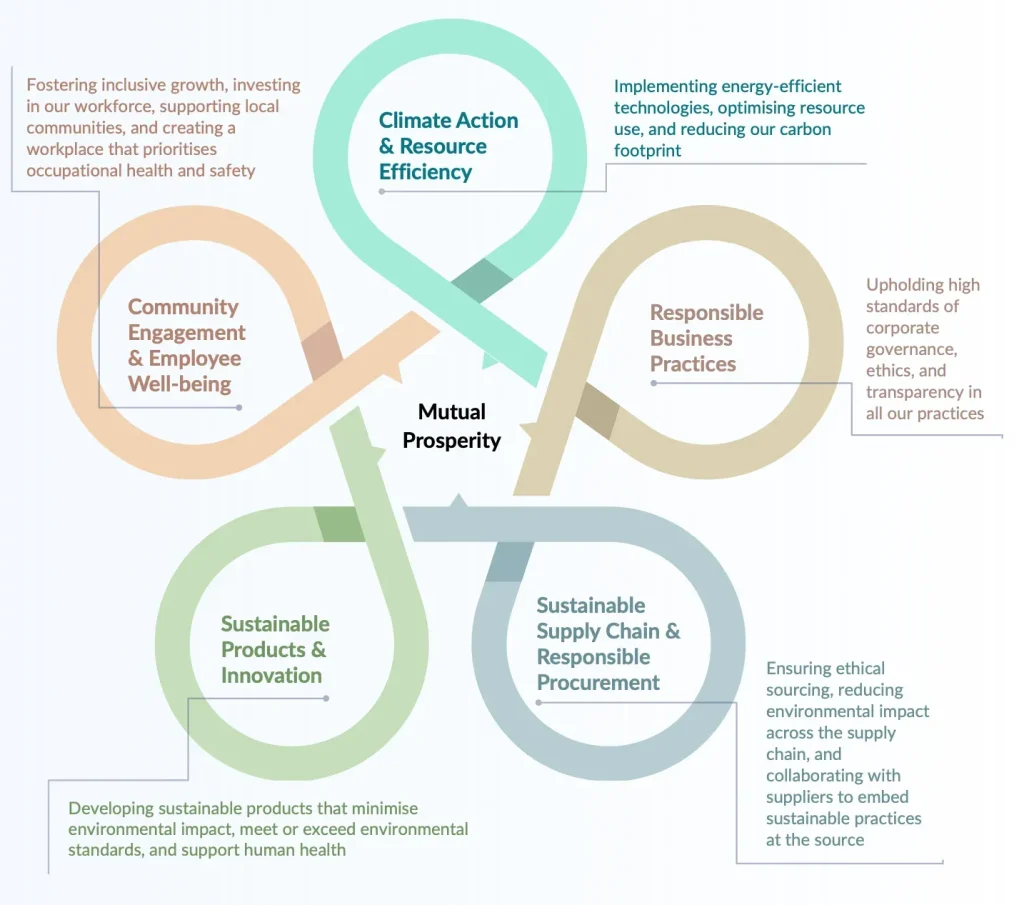
The Group has identified 11 material ESG topics, which cover our five sustainability pillars. These topics were selected through extensive consultation with key stakeholders, reflecting both their evolving expectations and our business priorities. These topics are aligned with GRI and SASB to ensure transparency and comparability.
Pillars
Material Topics
Relevance to our Sustainability Strategy

Governance
| Corporate Governance | Sound corporate governance ensures ethical business conduct, transparency, and accountability, strengthening trust with stakeholders and promoting long-term business sustainability. |
| Risk Management | The complex operational landscape of our industry, encompassing a broad spectrum of environmental, health and safety, supply chain, and reputational risks, necessitates a proactive and robust risk management strategy. |
Corporate Governance
Sound corporate governance ensures ethical business conduct, transparency, and accountability, strengthening trust with stakeholders and promoting long-term business sustainability.
Risk Management
The complex operational landscape of our industry, encompassing a broad spectrum of environmental, health and safety, supply chain, and reputational risks, necessitates a proactive and robust risk management strategy.

Environment & Safety
| Climate Change | NIPSEA Group recognises our responsibility in addressing climate change and is committed to achieving net zero by 2050. Reducing our carbon footprint and emissions through innovative solutions and sustainable practices is key to reaching this target. |
| Resources & the Environment | Water use and operational waste are inherent to our processes, so implementing strong water conservation and circularity measures is essential to protect the environment while maintaining operational efficiency. |
| Workforce Safety & Well-being | Employee well-being is closely linked to workplace safety. This is particularly important in the chemical industry where hazardous substances and processes present inherent risks. For this reason, we prioritise the safety and well-being of our people. |
Climate Change
NIPSEA Group recognises our responsibility in addressing climate change and is committed to achieving net zero by 2050. Reducing our carbon footprint and emissions through innovative solutions and sustainable practices is key to reaching this target.
Resources & the Environment
Water use and operational waste are inherent to our processes, so implementing strong water conservation and circularity measures is essential to protect the environment while maintaining operational efficiency.
Workforce Safety & Well-being
Employee well-being is closely linked to workplace safety. This is particularly important in the chemical industry where hazardous substances and processes present inherent risks. For this reason, we prioritise the safety and well-being of our people.

Innovation &
Product
Stewardship
Product
Stewardship
| Sustainably Advantaged Products | By embracing innovation, we reduce negative environmental impact, meet or surpass stringent environmental standards, promote cost savings, meet growing consumer preferences for more eco-friendly products, and enhance our brand reputation. |
| Product Safety Design | Robust product safety design reduces exposure to hazardous substances, improves application safety, and enhances protective performance. This helps minimise health and accident risks while strengthening trust in our brand. |
Sustainably Advantaged Products
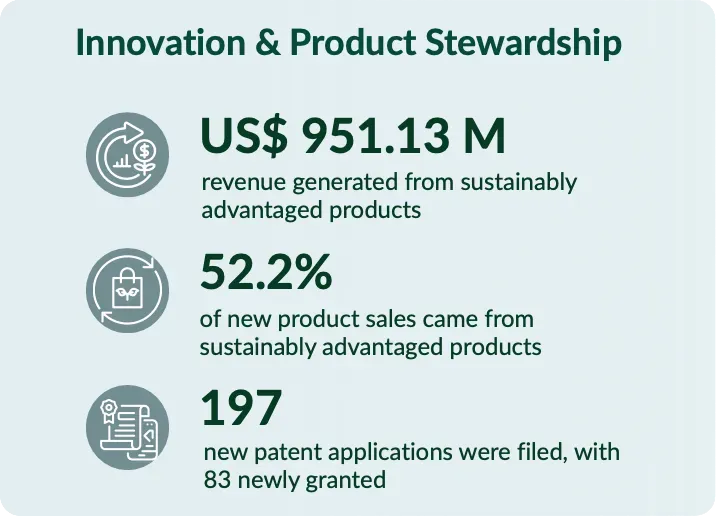
By embracing innovation, we reduce negative environmental impact, meet or surpass stringent environmental standards, promote cost savings, meet growing consumer preferences for more eco-friendly products, and enhance our brand reputation.
Product Safety Design
Robust product safety design reduces exposure to hazardous substances, improves application safety, and enhances protective performance. This helps minimise health and accident risks while strengthening trust in our brand.

People &
Community
Community
| Diversity & Inclusion | We believe that a diverse workforce drives innovation, deepens our understanding of diverse customer needs, and cultivates a more inclusive workplace, all of which contribute to NIPSEA Group's success. |
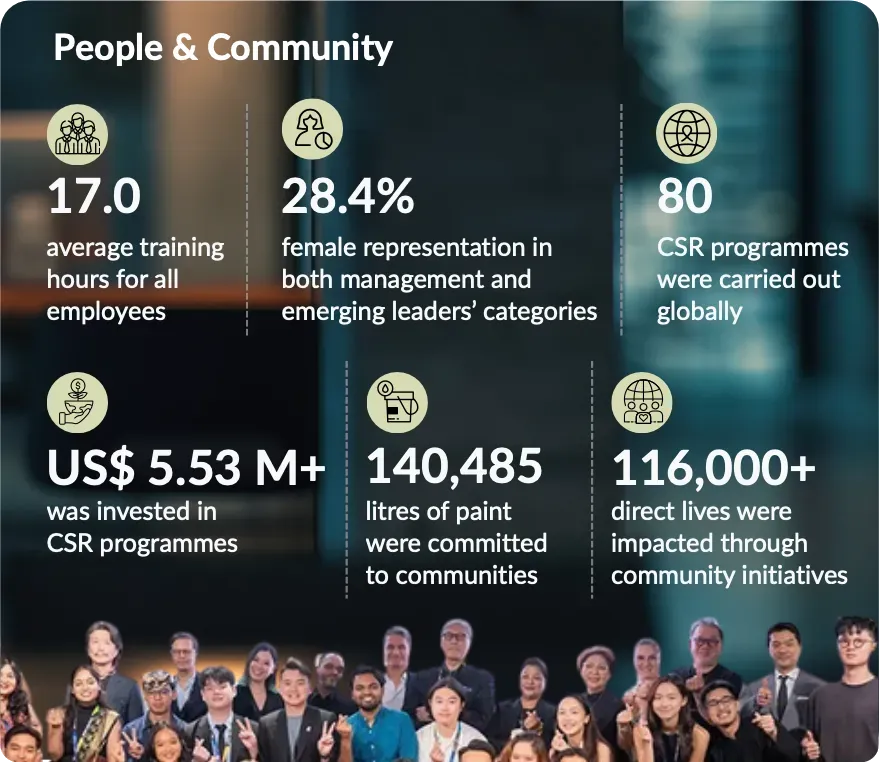
| Empowering People & Communities | By investing in a skilled workforce, we continue to grow our talent and leadership pipeline to address the challenges and opportunities presented by sustainability. We also recognise the importance of supporting our communities through collaboration and impactful contributions. |
Diversity & Inclusion
We believe that a diverse workforce drives innovation, deepens our understanding of diverse customer needs, and cultivates a more inclusive workplace, all of which contribute to NIPSEA Group's success.
Empowering People & Communities
By investing in a skilled workforce, we continue to grow our talent and leadership pipeline to address the challenges and opportunities presented by sustainability. We also recognise the importance of supporting our communities through collaboration and impactful contributions.

Sustainable
Procurement
Procurement
| Supplier Selection & Assessment | The quality and reliability of our suppliers are crucial to our success by ensuring quality assurance, regulatory compliance, cost efficiency, innovation, and competitiveness. Hence, it is important to mitigate any ESG-related risks in our supply chain through robust supplier selection and assessment criteria. |
| Supply Chain Resilience | Resilient supply chains can better withstand disruptions caused by events such as natural disasters, geopolitical tensions or supplier failures. By building resilience within our supply chain, we ensure business continuity and uphold high service standards. |
Supplier Selection & Assessment
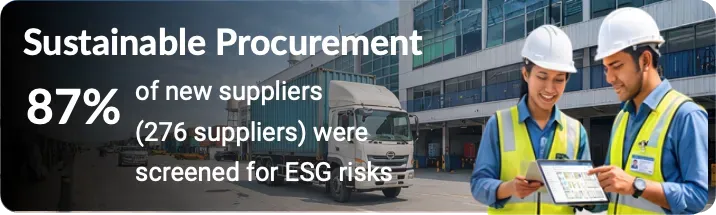
The quality and reliability of our suppliers are crucial to our success by ensuring quality assurance, regulatory compliance, cost efficiency, innovation, and competitiveness. Hence, it is important to mitigate any ESG-related risks in our supply chain through robust supplier selection and assessment criteria.
Supply Chain Resilience
Resilient supply chains can better withstand disruptions caused by events such as natural disasters, geopolitical tensions or supplier failures. By building resilience within our supply chain, we ensure business continuity and uphold high service standards.